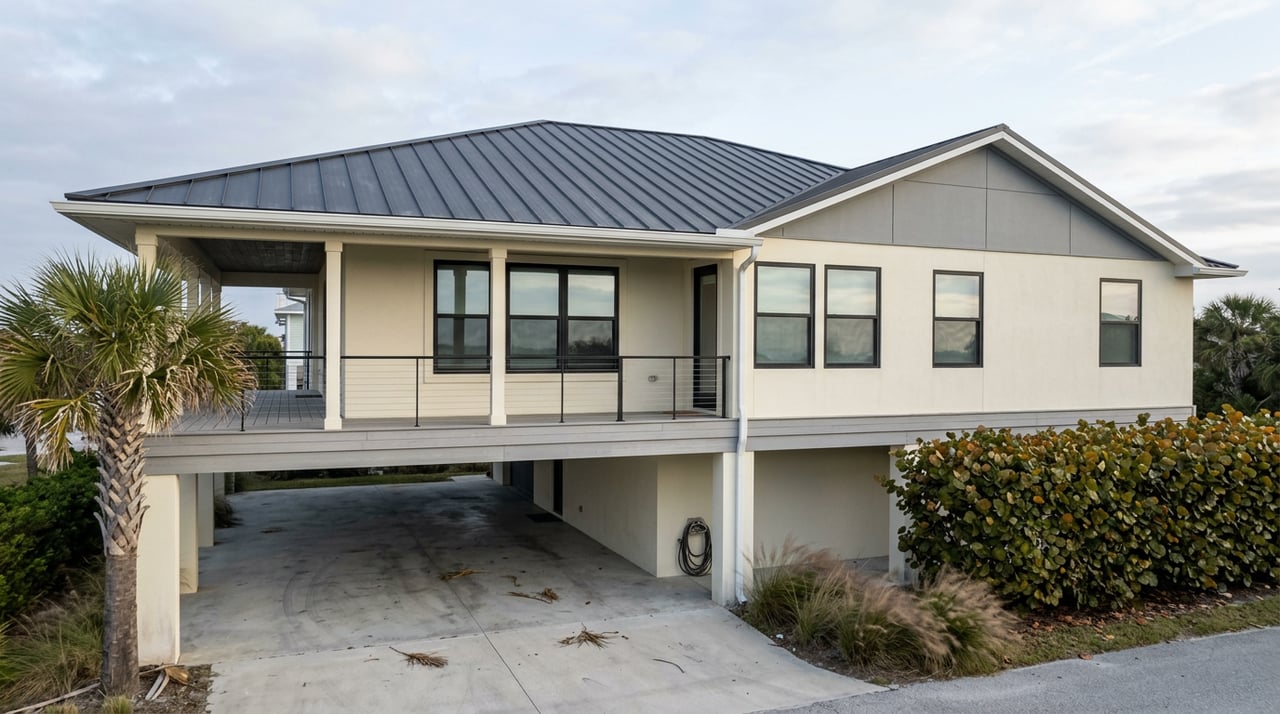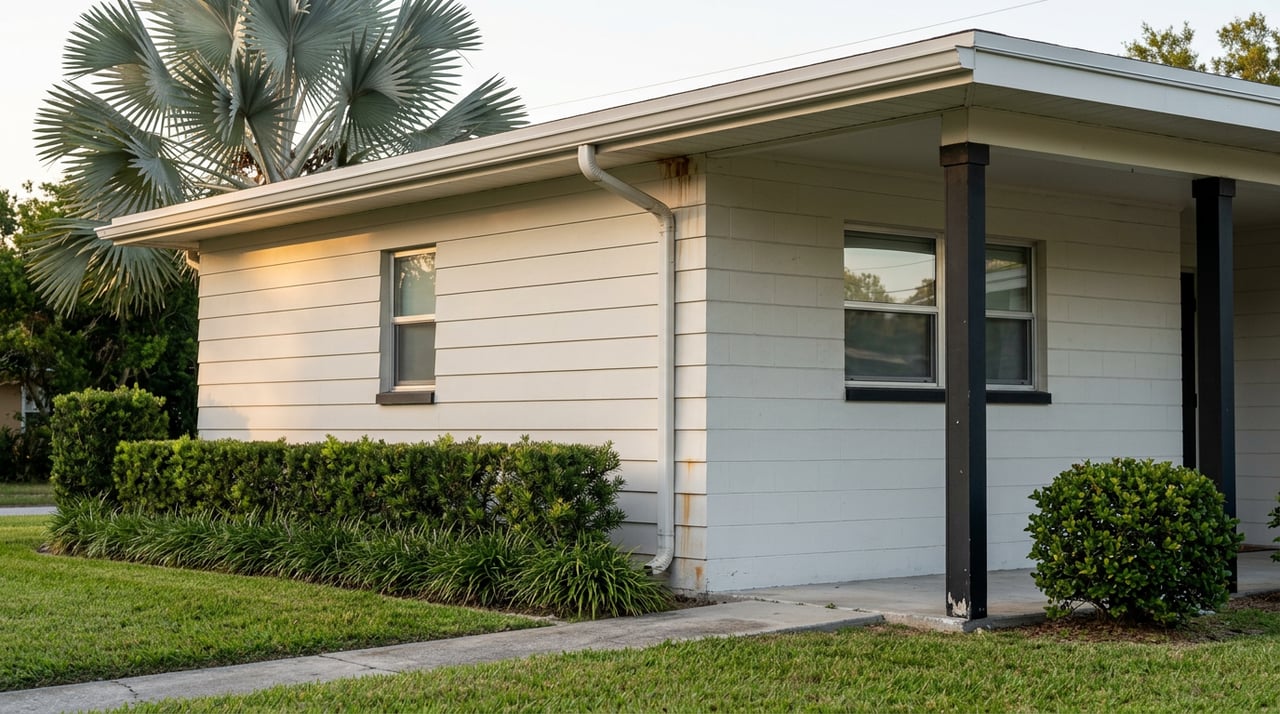
A buyer under contract on a block ranch off the Manatee Avenue corridor in 34209 does what most Florida buyers do during their first week of due diligence. They call an insurance agent for a quote, not because anyone told them to start there, but because Florida homeowners insurance has gotten expensive enough that people want the number early. The agent asks about the roof, the electrical panel, and then, almost as an aside, the siding. The buyer describes the pale cement-look panels on the exterior. The agent goes quiet for a second, then says most of their carriers won't touch it.
That conversation happens before the inspector shows up. It happens before the appraiser is even assigned. And in a surprising number of Bradenton transactions involving mid-century homes, it happens before the buyer has any idea that the siding on the house is the reason the deal is now more complicated than it looked on day one.
Where This Siding Actually Sits in Bradenton
Cement-asbestos siding, often called transite, was standard cladding in Florida from roughly 1945 through the mid-1970s. It was cheap, it didn't rot, and it held up to salt air and storm exposure better than most alternatives available at the time. Bradenton's postwar building years line up with that window almost exactly. The established neighborhoods west of the Manatee Avenue corridor in 34209 grew during this era, and Wares Creek, just west of downtown, carries a mix of homes dating from the 1920s through the 1950s. The Riverview Boulevard and Point Pleasant area, long one of the county's more prestigious addresses, blends turn-of-the-century houses with mid-century condo construction from the same decades.
None of this means every home in these areas has transite siding. It means the construction era overlaps precisely with the years the material was standard, which is why the topic comes up as often as it does when older Bradenton listings hit the market. A Southwest Florida emergency restoration company that covers Manatee County alongside Sarasota, Charlotte, Lee, and Collier counties still lists cement-asbestos siding and shingles among the materials its crews regularly find in this region's older housing stock, which confirms the material is a live, present-day fact in local homes rather than a historical footnote.
Gate One: The Insurance Desk Doesn't Ask What You'd Expect
Here is the part that catches people off guard. The material itself, when intact, is not especially dangerous. Cement-bonded asbestos is non-friable, meaning the fibers are locked into a hard matrix and don't release into the air under normal conditions. The health risk shows up when the siding is cut, sanded, crushed, or otherwise disturbed, not simply because it exists on a wall.
Insurance carriers don't underwrite for that nuance. Many decline coverage on asbestos-sided homes as a category, regardless of the panel's condition. A Florida insurance agency that places homeowners policies across the state has been direct about the scope of the problem: most of their carriers won't take the risk at all, and they maintain access to only one market willing to write it. That single-market reality is not a Bradenton-specific quirk. It reflects how thin the underwriting appetite is statewide for a material that, on paper, still says "asbestos" no matter how solid it looks in person.
The condition of the siding rarely changes the underwriting answer. A carrier that declines the category declines it whether the panels are pristine or cracked.
This is why the insurance call tends to land before anything else in the transaction. Florida buyers typically need a bound policy, or at minimum a firm quote, well before closing, and many start shopping in the first days of their inspection period simply because rates and availability have become unpredictable enough to want early certainty. For a transite-sided home, that early call can surface the real friction point weeks before an appraiser or inspector ever gets involved.
Gate Two: Lenders Split on the Same Question
Financing adds a second layer, and it splits along loan type rather than carrier. Conventional lenders will generally still fund a home with asbestos siding as long as the material is intact and the appraisal doesn't flag active deterioration. FHA and VA loans work differently. Both programs apply stricter property condition standards, and an appraiser who notes crumbling, visible damage, or other signs of wear can require repair, encapsulation, or a negotiated credit before the loan is cleared to close.
That means the same house can sail through a conventional underwriting file and stall in an FHA file, purely because of which program the buyer is using, not because the siding changed overnight.
The Order Most Buyers Don't Expect
Put the pieces in the sequence they actually happen, and the picture looks different than most buyers assume going in.
- Listing disclosure. Florida sellers are required to disclose known hazards that could affect a property's value or safety, including known asbestos-containing materials. This happens at or before contract, so a buyer should see it in writing early.
- Insurance shopping. Often within the first week of the inspection period, well ahead of any appraisal, and the point where a whole category of carriers may simply say no.
- Appraisal, if financed. This lands closer to closing and only matters as a gate if the loan is FHA or VA, or if a conventional appraiser happens to flag visible deterioration.
Most people walk into a transaction expecting the inspection report to be the moment of truth. For a transite-sided home, the insurance quote usually gets there first, and it can end or reshape a deal before the inspector has even scheduled a visit.
What You're Actually Deciding: Cover It or Take It Off
Once a buyer or seller knows the siding is asbestos-cement, the real decision is financial, not medical. Two paths exist, and current 2026 contractor pricing puts real numbers on both.
| Option | Typical Cost | What It Solves |
|---|---|---|
| Encapsulation (seal and paint over intact panels) | $2 to $6 per square foot | Locks fibers in place, satisfies most conventional lenders and some insurers, does not remove the material |
| Full removal and re-siding | $8 to $15 per square foot, roughly $16,000 to $22,000 on a typical 2,000-square-foot exterior | Eliminates the material entirely, opens the widest range of insurance carriers, resets the exterior for the next 30-plus years |
Encapsulation is the faster, cheaper fix, and it's often enough to satisfy a conventional lender. It does not, by itself, change an insurance carrier's category-level decline. Full removal is the only path that reliably widens the insurance pool, which is worth factoring in if the property has already run into a declined quote.
What This Means Heading Into Closing Season
Mid-September still sits inside Atlantic hurricane season, which matters here more than it might for other construction quirks. Storm impact is exactly the kind of disturbance that turns intact, non-friable siding into a real hazard, and insurers price that risk in before a named storm ever forms, not after. A seller listing a transite-sided home this fall is better served getting ahead of the insurance question before it becomes the buyer's unpleasant surprise in week one of contract. A buyer writing an offer on one of these homes should call an insurance agent before the inspector, not after, since that call is the one most likely to reshape the deal.
None of this makes a Bradenton mid-century home a bad buy. It makes it a house where the order of the conversation matters as much as the price. Sellers who get a disclosure and a rough insurance read together before listing tend to avoid the version of this deal that falls apart in week two. Buyers who ask the insurance question before they fall for the house tend to negotiate from a stronger position instead of a surprised one.
For a closer look at how Bradenton's older housing stock intersects with this era of construction, the Bradenton homes with asbestos exterior construction neighborhood page tracks current listings that fall inside this window. It pairs well with two related reads on how Bradenton's insurance underwriting actually works in practice: the block construction myth and the awning gap.
A Few Quick Answers
Is it illegal to sell a house with asbestos siding in Florida? No. Sellers must disclose known hazards, but the law doesn't require removal before a sale.
Can I just paint over it myself? Encapsulation is a real option, but it should be done by someone who understands how to seal cement-asbestos without disturbing it. A DIY approach that involves sanding or pressure washing the panels first is the exact scenario that turns a low-risk material into an airborne one.
Does having asbestos siding always tank the appraisal? Not automatically. Conventional appraisals generally treat intact siding as a non-issue. FHA and VA appraisals apply a stricter standard and are the ones most likely to flag it.
Should I get the siding tested before I list? If the home falls in the 1945 to 1975 construction window and the exterior looks like cement-panel or shingle siding, testing before listing gives you a documented answer to hand buyers instead of a guess. That documentation is often what keeps the insurance conversation from stalling the deal later.
If you're weighing a purchase or listing on one of Bradenton's mid-century blocks and want a straight read on how the insurance and financing pieces will actually play out for your specific property, Smith Garcia Group can walk through it with you. Schedule Your Market Consultation and get the sequence right before it becomes a surprise.