Why does a home with an attached carport clear the walkthrough with no complaints, then stall twice before closing, once at the appraisal desk and once at the insurance quote?
It happens often enough in Bradenton's under-$500,000 segment that it deserves an answer. A carport looks like a smaller, cheaper garage. To a lender and an insurer, it is not a smaller version of anything. It is a different structure with its own rules, and those rules show up at exactly the two moments a buyer can least afford a surprise: the appraisal that sets the loan amount, and the insurance quote that determines whether the deal pencils out.
The Adjustment Line Nobody Explains Upfront
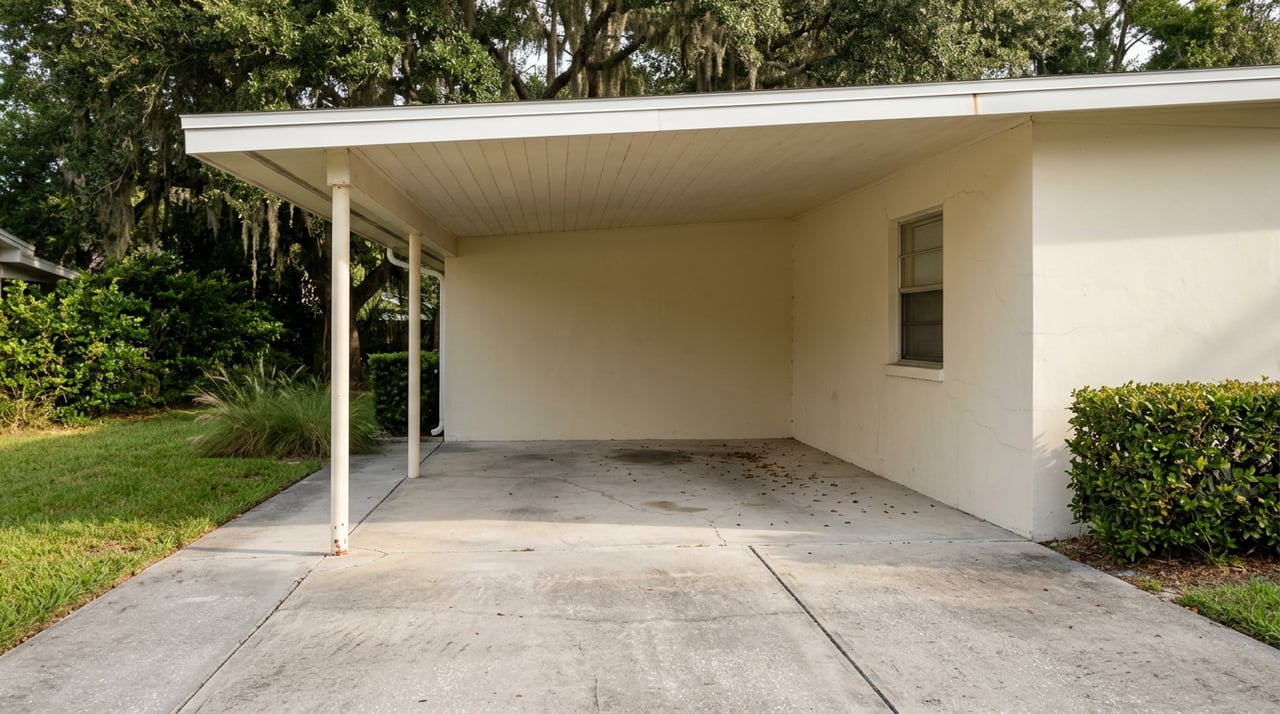
Federal Housing Administration appraisal standards do not treat a carport as a discounted garage. HUD's own appraisal report guidance instructs appraisers to record the car storage type separately and then "calculate adjustments in accordance with market acceptance of carport value versus garage and size." That instruction means two homes with identical square footage, identical lot size, and identical condition can still land at different appraised values once one has a carport and the comparable sale down the street has an enclosed garage.
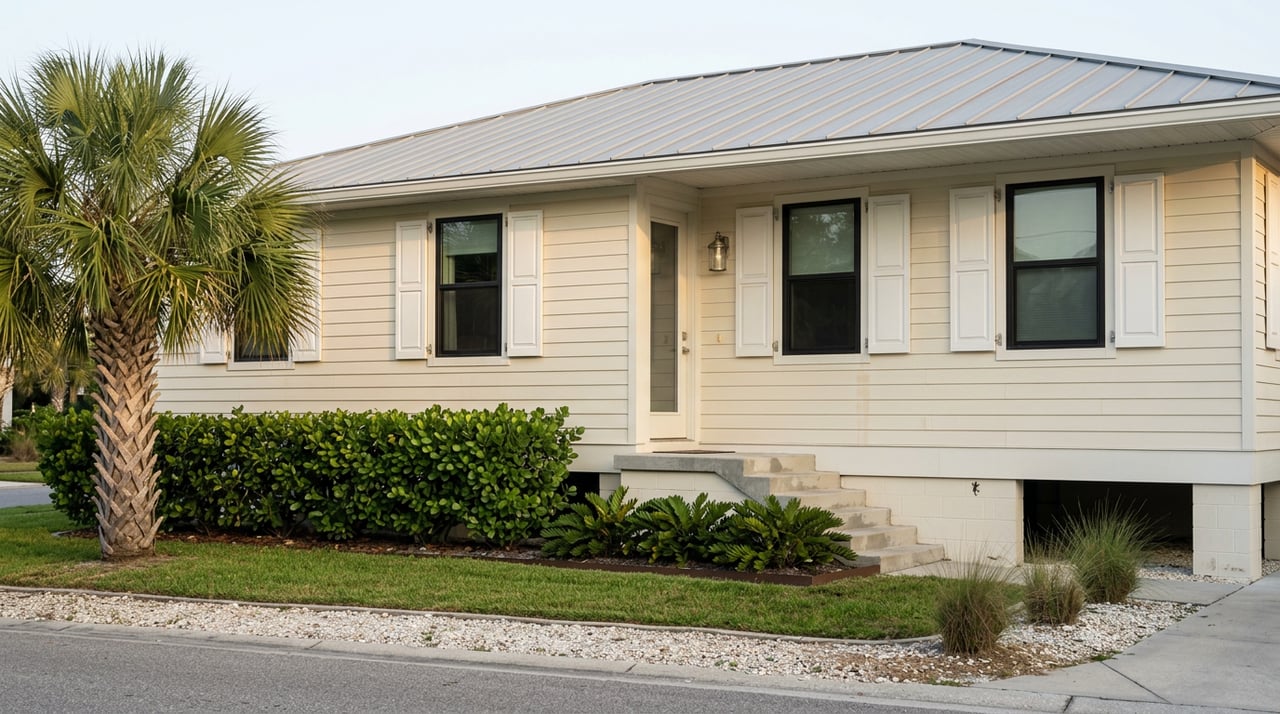
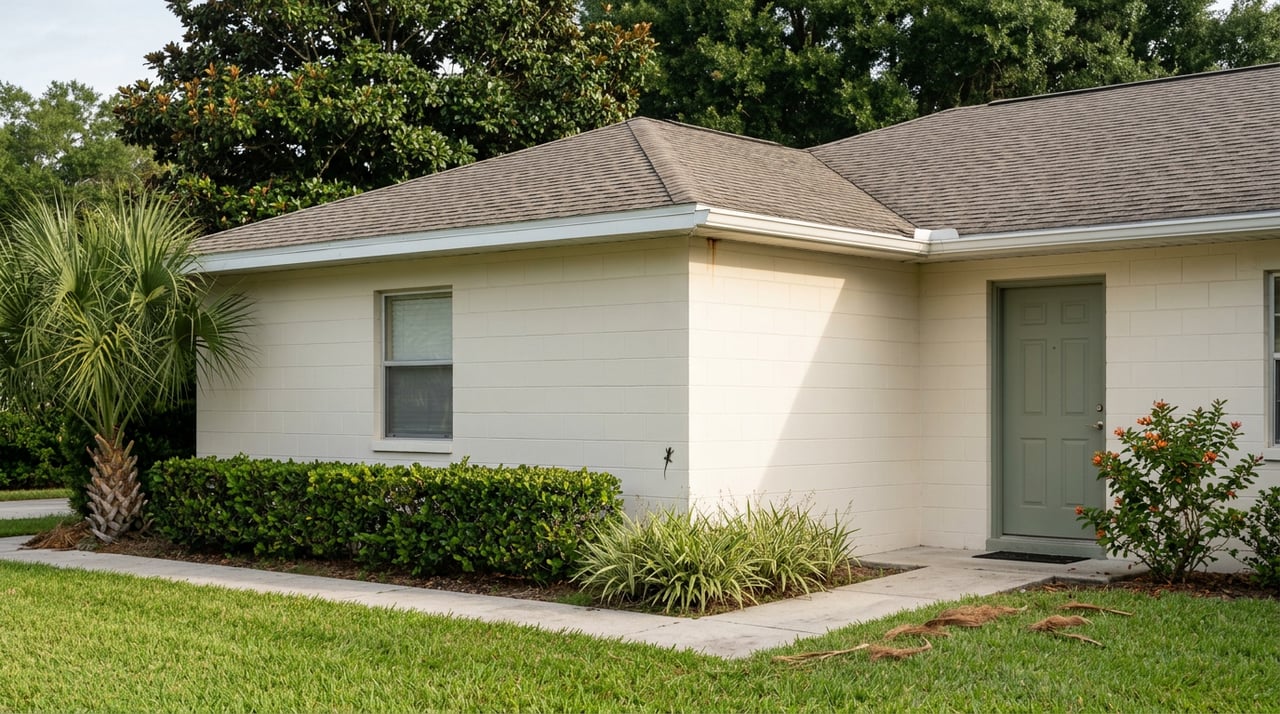
This is not a hypothetical for Bradenton's older, entry-level inventory. In neighborhoods where the housing stock was built in the 1950s and 1960s, before central air and enclosed two-car garages were standard, carports are common enough that they shape entire streets. The appraiser working that file has to find comparable sales, and if the closest comps carry garages, the adjustment goes against the carport home. Buyers rarely see this coming because nothing about the listing photos or the showing signals it. It surfaces on the appraisal report, sometimes days before closing.
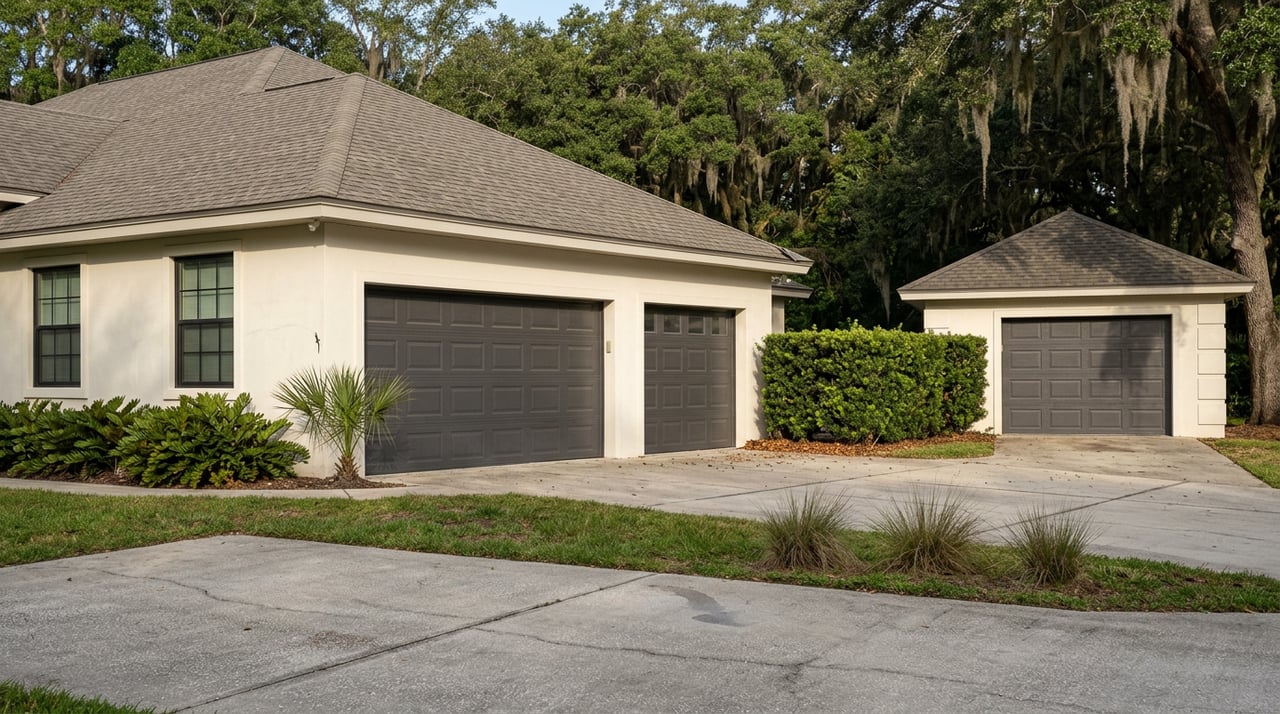
Conventional loans give the appraiser more discretion than FHA, but the underlying math does not disappear. A lender is still lending against comparable sales, and comparable sales in a mixed-inventory pocket will include both carport and garage homes. The buyer who assumes a carport is simply "a garage minus the door" is assuming away a line item that shows up in the report itself.
What This Looks Like on the Ground: Bayshore Gardens
Bayshore Gardens is a useful place to see this play out, not because it is unusual but because it is exactly the kind of neighborhood where the carport question actually matters. Laid out starting in 1956 as a grid of single-story Florida ranch homes west of 14th Street, the community still carries that midcentury footprint today: modest square footage, mature oak and pine canopy, and a mix of attached carports and later garage conversions on otherwise identical lots. Single-family homes here typically list well under $350,000, with waterfront exceptions running $700,000 to $2 million when they surface, which is rare.
Zillow's tracked value for the area sits in the mid-$250,000s as of August 2026, and the broader 34207 zip code, which covers Bayshore Gardens and the surrounding streets, shows a typical home value of $208,802 as of the same month, according to Zillow's Home Value Index. That zip also scores as buyer-leaning on price and negotiating leverage, with roughly a quarter of listings carrying a price cut. This is not a market where sellers can shrug off an appraisal gap. In a segment this tight, a few thousand dollars of adjustment can be the difference between a loan that clears and a renegotiated contract.
Residents in the area are close to the Bayshore Gardens Marina, State College of Florida, and the Cortez Road corridor, home to long-running local spots like the 88 Piano Bar and Motorworks Brewing. None of that changes what an appraiser writes on the car storage line. The neighborhood's charm and its underwriting mechanics run on separate tracks.
The Insurance Endorsement Nobody Reads Until Renewal
The second friction point sits on the insurance side, and it is arguably the one that costs buyers more over time.
Florida homeowners policies typically split coverage into two buckets: dwelling coverage, which protects the main structure, and "Other Structures" coverage, which is usually capped around 10 percent of the dwelling limit. Whether a carport falls into one bucket or the other depends on whether it touches the house. An attached carport is generally treated as part of the dwelling. A detached one falls under the Other Structures cap, which means a $300,000 dwelling policy might only carry $30,000 of protection for anything standing apart from the main house.
That distinction matters, but it is not the whole story. Many Florida insurers go further and specifically exclude attached carports and screened enclosures from standard coverage. As one Florida insurance agency puts it plainly, "most Florida insurers specifically include language that excludes coverage for these types of attached structures." Where that is true, the homeowner needs a separate endorsement, often called a Limited Screened Enclosure and/or Carport endorsement, and that endorsement typically pays out on an actual cash value basis rather than full replacement cost. In practice, that means a five-year-old carport roof damaged in a storm gets valued at its depreciated worth, not what it would cost to rebuild it today.
Buyers who assume a carport is covered the same way as an attached garage are making a reasonable but incorrect assumption. The fix is not complicated. It is a conversation with the insurance agent before closing, not after the first claim.
| Structure type | Typical insurance treatment | Typical appraisal treatment |
|---|---|---|
| Attached garage | Dwelling coverage | Comparable to other garage sales, minimal adjustment |
| Attached carport | Often dwelling coverage, but frequently requires a separate endorsement paid on actual cash value | Adjusted against garage comps per HUD/lender guidance |
| Detached garage or carport | Other Structures coverage, typically capped near 10% of dwelling limit | Valued and adjusted separately from the main dwelling |
Why August 2026 Is the Right Moment to Ask This Question
Manatee County's market right now makes this worth raising before an offer goes in, not after. For the week of August 2 through 8, 2026, the county recorded a median sold price of $445,000 across 156 closed sales, with sellers achieving about 94.2 percent of list price on average. New listing activity was heavily weighted toward the lower end: 121 of the week's 191 new listings priced under $500,000, more than any other price band. Bradenton itself generated 82 of those new listings and 75 closings, the largest volume among the county's reporting cities.
That concentration of activity under $500,000 is precisely where carport homes live. It is also where a few thousand dollars of appraisal adjustment, or an unexpected insurance endorsement, has the most leverage to change a buyer's math. A softer, more balanced market gives buyers room to negotiate around these frictions before they become closing-day surprises, whether that means asking for a credit tied to an anticipated appraisal gap or confirming the insurance quote before the option period expires.
FAQ
Does a carport always lower the appraised value compared to a garage? Not always, but appraisers are required to consider the market's acceptance of carport value versus garage value when selecting comparables and making adjustments. In a neighborhood with a mix of both, the adjustment is common enough that buyers should expect the question to come up.
Can I convert a carport into an enclosed garage before selling? Some owners do, but any conversion needs to be permitted and built to match the quality of the main structure to be counted toward living or garage space by an appraiser. An unpermitted conversion can create its own complications rather than solving the original one.
Is a carport a dealbreaker for financing? No. It is a documented variable that a knowledgeable buyer accounts for early, through the right comparable sales and an insurance quote obtained before the appraisal comes back, rather than after.
A carport home in a neighborhood like Bayshore Gardens can still be a smart, well-priced purchase. The difference between a smooth closing and a stressful one usually comes down to knowing which questions to ask before the numbers are locked in. If you are weighing a carport home against a garage comparable in Bradenton, Smith Garcia Group can walk through the appraisal and insurance mechanics with you before you write the offer, not after.